Sunday, 25 November 2012

Microorganisms Convert Renewable Electricity into Carbon-Neutral Methane


Microorganisms Convert Renewable Electricity into Carbon-Neutral Methane

July 25, 2012
using microbes that can convert renewable electricity into carbon-neutral methane
Post-doctoral fellow Svenja Lohner, left, and Professor Alfred Spormann. Their research, along with the work of others, could help solve one of the biggest challenges for large-scale renewable energy: What to do with surplus electricity generated by photovoltaic power stations and wind farms. L.A. Cicero
Taking a “greener” approach to methane production, scientists from Stanford and Pennsylvania State are raising colonies of microorganisms, called methanogens, which have the ability to turn electrical energy into pure methane in microbial process that is carbon neutral.
Microbes that convert electricity into methane gas could become an important source of renewable energy, according to scientists from Stanford and Pennsylvania State universities.
Researchers at both campuses are raising colonies of microorganisms, called methanogens, which have the remarkable ability to turn electrical energy into pure methane – the key ingredient in natural gas. The scientists’ goal is to create large microbial factories that will transform clean electricity from solar, wind or nuclear power into renewable methane fuel and other valuable chemical compounds for industry.
“Most of today’s methane is derived from natural gas, a fossil fuel,” said Alfred Spormann, a professor of chemical engineering and of civil and environmental engineering at Stanford. “And many important organic molecules used in industry are made from petroleum. Our microbial approach would eliminate the need for using these fossil resources.”
Stanford Professor Alfred Spormann explains how the system works.
While methane itself is a formidable greenhouse gas, 20 times more potent than CO2, the microbial methane would be safely captured and stored, thus minimizing leakage into the atmosphere, Spormann said.
“The whole microbial process is carbon neutral,” he explained. “All of the CO2 released during combustion is derived from the atmosphere, and all of the electrical energy comes from renewables or nuclear power, which are also CO2-free.”
Methane-producing microbes, he added, could help solve one of the biggest challenges for large-scale renewable energy: What to do with surplus electricity generated by photovoltaic power stations and wind farms.
“Right now there is no good way to store electricity,” Spormann said. “However, we know that some methanogens can produce methane directly from an electrical current. In other words, they metabolize electrical energy into chemical energy in the form of methane, which can be stored. Understanding how this metabolic process works is the focus of our research. If we can engineer methanogens to produce methane at scale, it will be a game changer.”
‘Green’ methane
Burning natural gas accelerates global warming by releasing carbon dioxide that’s been trapped underground for millennia. The Stanford and Penn State team is taking a “greener” approach to methane production. Instead of drilling rigs and pumps, the scientists envision large bioreactors filled with methanogens – single-cell organisms that resemble bacteria but belong to a genetically distinct group of microbes called archaea.
By human standards, a methanogen’s lifestyle is extreme. It cannot grow in the presence of oxygen. Instead, it regularly dines on atmospheric carbon dioxideand electrons borrowed from hydrogen gas. The byproduct of this microbial meal is pure methane, which methanogens excrete into the atmosphere.
The researchers plan to use this methane to fuel airplanes, ships and vehicles. In the ideal scenario, cultures of methanogens would be fed a constant supply of electrons generated from emissions-free power sources, such as solar cells, wind turbines and nuclear reactors. The microbes would use these clean electrons to metabolize carbon dioxide into methane, which can then be stockpiled and distributed via existing natural gas facilities and pipelines when needed.
When the microbial methane is burnt as fuel, carbon dioxide would be recycled back into the atmosphere where it originated from – unlike conventional natural gas combustion, which contributes to global warming.
“Microbial methane is much more ecofriendly than ethanol and other biofuels,” Spormann said. “Corn ethanol, for example, requires acres of cropland, as well as fertilizers, pesticides, irrigation and fermentation. Methanogens are much more efficient, because they metabolize methane in just a few quick steps.”
Microbial communities
For this new technology to become commercially viable, a number of fundamental challenges must be addressed.
“While conceptually simple, there are significant hurdles to overcome before electricity-to-methane technology can be deployed at a large scale,” said Bruce Logan, a professor of civil and environmental engineering at Penn State. “That’s because the underlying science of how these organisms convert electrons into chemical energy is poorly understood.”
In 2009, Logan’s lab was the first to demonstrate that a methanogen strain known as Methanobacterium palustre could convert an electrical current directly into methane. For the experiment, Logan and his Penn State colleagues built a reverse battery with positive and negative electrodes placed in a beaker of nutrient-enriched water.
The researchers spread a biofilm mixture of M. palustre and other microbial species onto the cathode. When an electrical current was applied, the M. palustre began churning out methane gas.
“The microbes were about 80 percent efficient in converting electricity to methane,” Logan said.
The rate of methane production remained high as long as the mixed microbial community was intact. But when a previously isolated strain of pure M. palustre was placed on the cathode alone, the rate plummeted, suggesting that methanogens separated from other microbial species are less efficient than those living in a natural community.
“Microbial communities are complex,” Spormann added. “For example, oxygen-consuming bacteria can help stabilize the community by preventing the build-up of oxygen gas, which methanogens cannot tolerate. Other microbes compete with methanogens for electrons. We want to identify the composition of different communities and see how they evolve together over time.”
Microbial zoo
To accomplish that goal, Spormann has been feeding electricity to laboratory cultures consisting of mixed strains of archaea and bacteria. This microbial zoo includes bacterial species that compete with methanogens for carbon dioxide, which the bacteria use to make acetate – an important ingredient in vinegar, textiles and a variety of industrial chemicals.
“There might be organisms that are perfect for making acetate or methane but haven’t been identified yet,” Spormann said. “We need to tap into the unknown, novel organisms that are out there.”
At Penn State, Logan’s lab is designing and testing advanced cathode technologies that will encourage the growth of methanogens and maximize methane production. The Penn State team is also studying new materials for electrodes, including a carbon-mesh fabric that could eliminate the need for platinum and other precious metal catalysts.
“Many of these materials have only been studied in bacterial systems but not in communities with methanogens or other archaea,” Logan said. “Our ultimate goal is to create a cost-effective system that reliably and robustly produces methane from clean electrical energy. It’s high-risk, high-reward research, but new approaches are needed for energy storage and for making useful organic molecules without fossil fuels.”
The Stanford-Penn State research effort is funded by a three-year grant from the Global Climate and Energy Project at Stanford.
Source: Mark Shwartz, Stanford University News
Image: L.A. Cicero

New Class of Synthetic Vaccines Piggyback on 3-D DNA Nanostructures


New Class of Synthetic Vaccines Piggyback on 3-D DNA Nanostructures

July 25, 2012
DNA nanostructures to make safer and more effective vaccines
Xiaowei Liu examines cells to test whether DNA nanostructures could reside comfortably within the appropriate compartment of the cells and be stable for several hours—-long enough to set in motion an immune cascade.
Scientists at the Biodesign Institute at Arizona State University are using DNA nanotechnology to make an entirely new class of synthetic vaccines that could be delivered by piggybacking onto self-assembled, three-dimensional DNA nanostructures.
In a quest to make safer and more effective vaccines, scientists at the Biodesign Institute at Arizona State University have turned to a promising field called DNA nanotechnology to make an entirely new class of synthetic vaccines.
In a study published in the journal Nano Letters, Biodesign immunologist Yung Chang joined forces with her colleagues, including DNA nanotechnology innovator Hao Yan, to develop the first vaccine complex that could be delivered safely and effectively by piggybacking onto self-assembled, three-dimensional DNA nanostructures.
“When Hao treated DNA not as a genetic material, but as a scaffolding material, that made me think of possible applications in immunology,” said Chang, an associate professor in the School of Life Sciences and a researcher in the Biodesign Institute’s Center for Infectious Diseases and Vaccinology. “This provided a great opportunity to try to use these DNA scaffolds to make a synthetic vaccine.”
“The major concern was: Is it safe? We wanted to mimic the assembly of molecules that can trigger a safe and powerful immune response in the body. As Hao’s team has developed a variety of interesting DNA nanostructures during the past few years, we have been collaborating more and more with a goal to further explore some promising human health applications of this technology.”
The core multidisciplinary research team members also included: ASU chemistry and biochemistry graduate student and paper first author Xiaowei Liu, visiting professor Yang Xu, chemistry and biochemistry assistant professor Yan Liu, School of Life Sciences undergraduate Craig Clifford and Tao Yu, visiting graduate student from Sichuan University.
Chang points out that vaccines have led to the some of the most effective public health triumphs in all of medicine. The state-of-the-art in vaccine development relies on genetic engineering to assemble immune system stimulating proteins into virus-like particles (VLPs) that mimic the structure of natural viruses—minus the harmful genetic components that cause disease.
DNA nanotechnology, where the molecule of life can be assembled into 2-D and 3-D shapes, has an advantage of being a programmable system that can precisely organize molecules to mimic the actions of natural molecules in the body.
“We wanted to test several different sizes and shapes of DNA nanostructures and attach molecules to them to see if they could trigger an immune response,” said Yan, the Milton D. Glick Distinguished Chair in the Department of Chemistry and Biochemistry and researcher in Biodesign’s Center for Single Molecule Biophysics. With their biomimicry approach, the vaccine complexes they tested closely resembled natural viral particles in size and shape.
As proof of concept, they tethered onto separate pyramid-shaped and branched DNA structures a model immune stimulating protein called streptavidin (STV) and immune response boosting compound called an adjuvant (CpG oligo-deoxynucletides) to make their synthetic vaccine complexes.
First, the group had to prove that the target cells could gobble the nanostructures up. By attaching a light-emitting tracer molecule to the nanostructures, they found the nanostructures residing comfortably within the appropriate compartment of the cells and stable for several hours—-long enough to set in motion an immune cascade.
Next, in a mouse challenge, they targeted the delivery of their vaccine cargo to cells that are first responders in initiating an effective immune response, coordinating interaction of important components, such as: antigen presenting cells, including macrophages, dendritic cells and B cells. After the cargo is internalized in the cell, they are processed and “displayed” on the cell surface to T cells, white blood cells that play a central role in triggering a protective immune response. The T cells, in turn, assist B cells with producing antibodies against a target antigen.
To properly test all variables, they injected: 1) the full vaccine complex 2) STV (antigen) alone 3) the CpG (adjuvant) mixed with STV.
Over the course of 70 days, the group found that mice immunized with the full vaccine complex developed a more robust immune response up to 9-fold higher than the CpG mixed with STV. The pyramid (tetrahedral) shaped structure generated the greatest immune response. Not only was immune response to the vaccine complex specific and effective, but also safe, as the research team showed, using two independent methods, that no immune response triggered from introducing the DNA platform alone.
“We were very pleased,” said Chang. “It was so nice to see the results as we predicted. Many times in biology we don’t see that.”
With the ability to target specific immune cells to generate a response, the team is excited about the prospects of this new platform. They envision applications where they could develop vaccines that require multiple components, or customize their targets to tailor the immune response.
Furthermore, there is the potential to develop targeted therapeutics in a similar manner as some of the new generation of cancer drugs.
Overall, though the field of DNA is still young, the research is advancing at a breakneck pace toward translational science that is making an impact on health care, electronics, and other applications.
While Chang and Yan agree that there is still much room to explore the manipulation and optimization of the nanotechnology, it also holds great promise. “With this proof of concept, the range of antigens that we could use for synthetic vaccine develop is really unlimited,” said Chang.
The work was supported by funding from the Department of Defense and National Institutes of Health (National Cancer Institute, National Institute of Drug Abuse).
Source: ASU Biodesign Institute
Image: ASU Biodesign Institute

NASA’s Space Launch System Passes Review, Moving to Preliminary Design Phase


NASA’s Space Launch System Passes Review, Moving to Preliminary Design Phase

July 26, 2012
NASA's Space Launch System
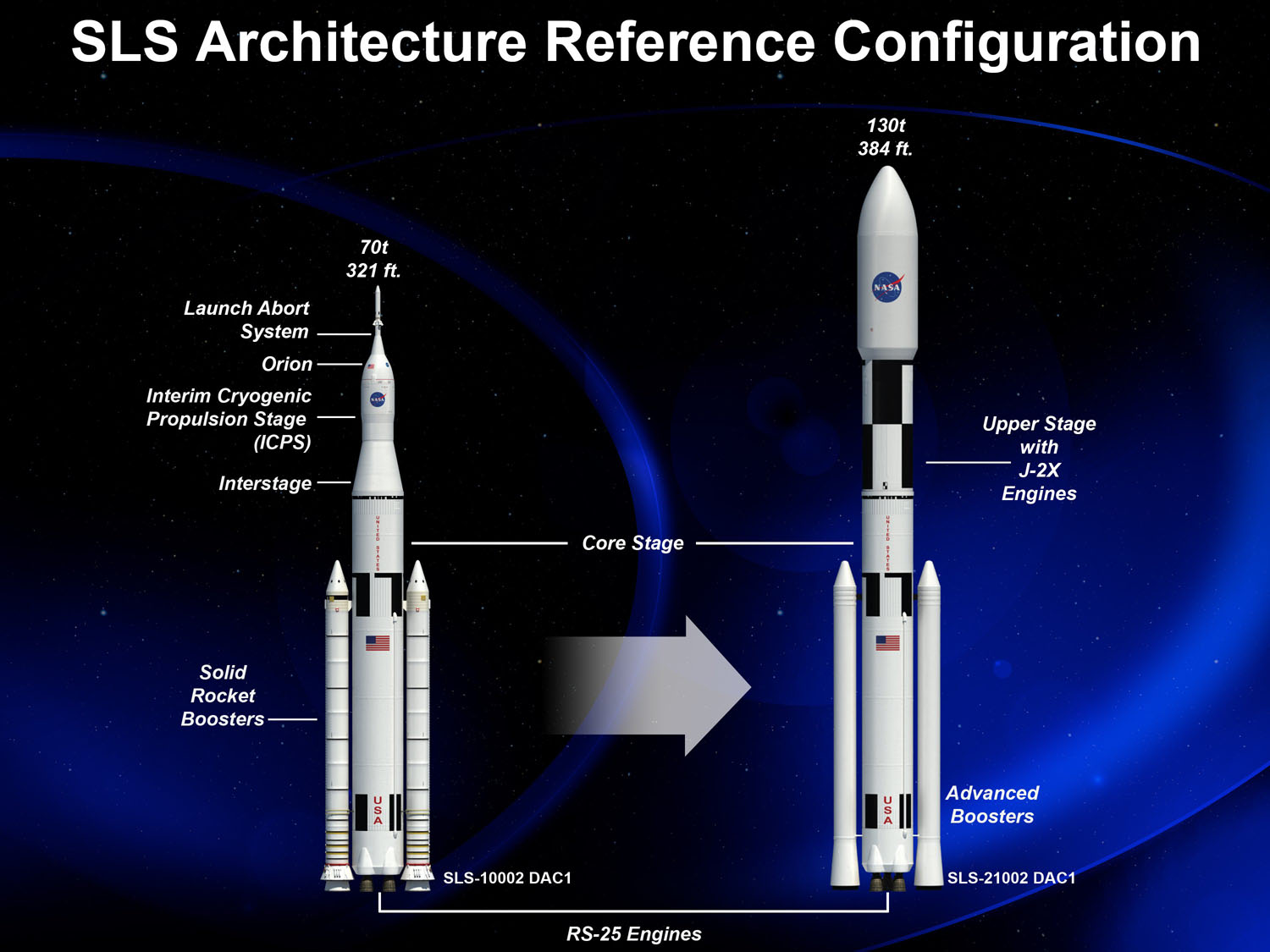
SLS Architecture Reference Configuration
An artist rendering of the various configurations of NASA’s Space Launch System (SLS), managed by the Marshall Space Flight Center in Huntsville, Ala. The flexible configuration, sharing the same basic core-stage, allows for different crew and cargo flights as needed, promoting efficiency, time and cost savings. The SLS enables exploration missions beyond low-Earth orbit and support travel to asteroids, Mars and other destinations within our solar system. Image credit: NASA
With the hope of bringing explorers to nearby asteroids, Mars and its moons, and to destinations even farther across our solar system, NASA’s Space Launch System passed several major agency reviews and is now moving to its preliminary design phase.
The rocket that will launch humans farther into space than ever before passed a major NASA review Wednesday. The Space Launch System (SLS) Program completed a combined System Requirements Review and System Definition Review, which set requirements of the overall launch vehicle system. SLS now moves ahead to its preliminary design phase.
The SLS will launch NASA’s Orion spacecraft and other payloads, and provide an entirely new capability for human exploration beyond low Earth orbit.
These NASA reviews set technical, performance, cost and schedule requirements to provide on-time development of the heavy-lift rocket. As part of the process, an independent review board comprised of technical experts from across NASA evaluated SLS Program documents describing vehicle specifications, budget and schedule. The board confirmed SLS is ready to move from concept development to preliminary design.
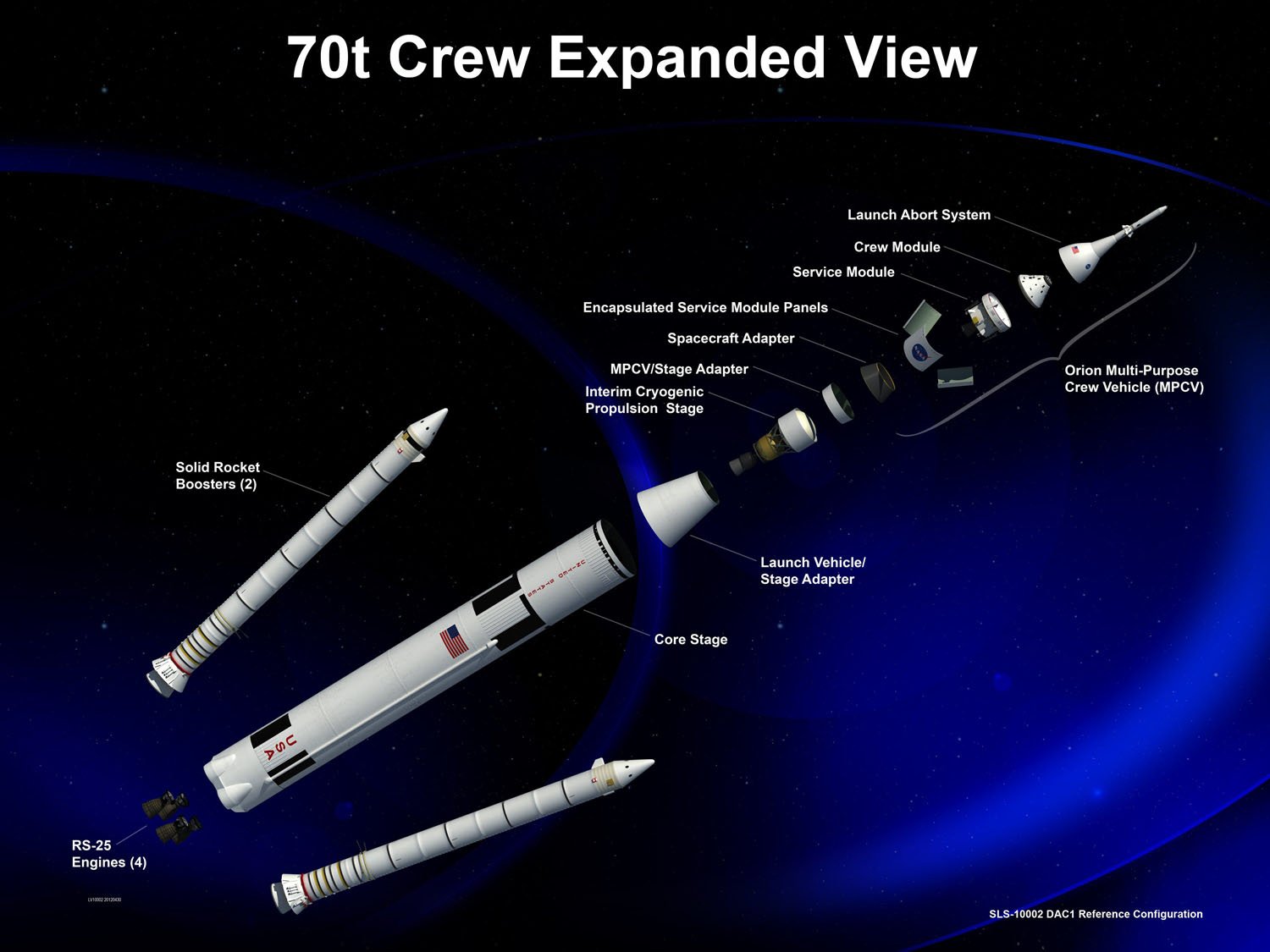
expanded view of an artist rendering of the 70-metric-ton configuration of NASA's Space Launch System
An expanded view of an artist rendering of the 70-metric-ton configuration of NASA’s Space Launch System. (NASA)
“This new heavy-lift launch vehicle will make it possible for explorers to reach beyond our current limits, to nearby asteroids, Mars and its moons, and to destinations even farther across our solar system,” said William Gerstenmaier, associate administrator for the Human Exploration and Operations Mission Directorate at NASA Headquarters in Washington. “The in-depth assessment confirmed the basic vehicle concepts of the SLS, allowing the team to move forward and start more detailed engineering design.”
The reviews also confirmed the SLS system architecture and integration with the Orion spacecraft, managed by NASA’s Johnson Space Center in Houston, and the Ground Systems Development and Operations Program, which manage the operations and launch facilities at NASA’s Kennedy Space Center in Florida.
“This is a pivotal moment for this program and for NASA,” said SLS Program Manager Todd May. “This has been a whirlwind experience from a design standpoint. Reaching this key development point in such a short period of time, while following the strict protocol and design standards set by NASA for human spaceflight is a testament to the team’s commitment to delivering the nation’s next heavy-lift launch vehicle.”
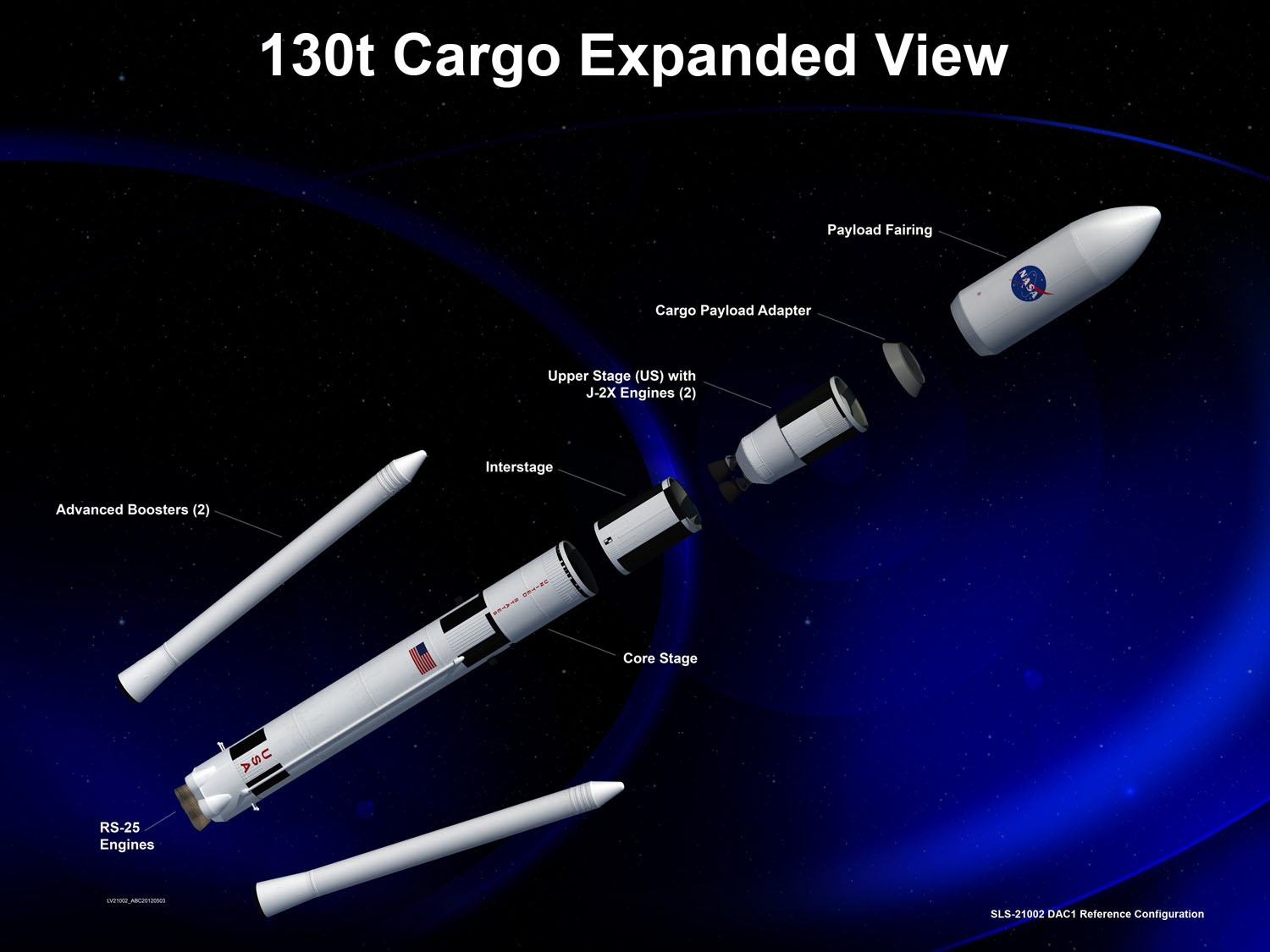
expanded view of an artist rendering of the 130 metric ton configuration of NASA's Space Launch System
An expanded view of an artist rendering of the 130 metric ton configuration of NASA’s Space Launch System. (NASA)
SLS reached this major milestone less than 10 months after the program’s inception. The combination of the two assessments represents a fundamentally different way of conducting NASA program reviews. The SLS team is streamlining processes to provide the nation with a safe, affordable and sustainable heavy-lift launch vehicle capability. The next major program milestone is preliminary design review, targeted for late next year.
The first test flight of NASA’s Space Launch System, which will feature a configuration for a 70-metric-ton (77-ton) lift capacity, is scheduled for 2017. As SLS evolves, a three-stage launch vehicle configuration will provide a lift capability of 130 metric tons (143 tons) to enable missions beyond low Earth orbit and support deep space exploration.
NASA’s Marshall Space Flight Center in Huntsville, Ala., manages the SLS program. Across the country NASA and its industry partners continue to make progress on SLS hardware that will be integrated into the final design. The RS-25 core stage and J-2X upper-stage rocket engine in development by Pratt & Whitney Rocketdyne of Canoga Park, Calif., for the future two-stage SLS, will be tested at NASA’s Stennis Space Center in Mississippi. The prime contractor for the five-segment solid rocket boosters, ATK of Brigham City, Utah, has begun processing its first SLS boosters in preparation for an initial qualification test next year, ahead of their use for the first two exploration missions. The Boeing Co. in Huntsville is designing the SLS core stage, to be built at NASA’s Michoud Assembly Facility in New Orleans and tested at Stennis before being shipped to Kennedy.
Source: Trent J. Perrotto, NASA; Kim Henry, Marshall Space Flight Center
Images: NASA

H.E.S.S. II Telescope Starts Operation and Detects its Very First Images


H.E.S.S. II Telescope Starts Operation and Detects its Very First Images

July 26, 2012
H.E.S.S. II telescope
New gamma-eye for the H.E.S.S family: The telescope has a antenna with a diameter of 28 meters and weighs over 6000 tons. H.E.S.S. Collaboration, Clementina Medina/Irfu-CEA
With a 28-meter mirror and a mass of almost 600 tons, the H.E.S.S. II telescope is up and running, detecting its very first images of atmospheric particle cascades generated by cosmic gamma rays and by cosmic rays.
On July 26, 2012 the H.E.S.S. II telescope started operation in Namibia. Dedicated to observing the most violent and extreme phenomena of the Universe in very high energy gamma-rays, H.E.S.S. II is the largest Cherenkov telescope ever built, with its 28-meter-sized mirror. Together with the four smaller (12 meter) telescopes already in operation since 2004, the H.E.S.S. (“High Energy Stereoscopic System”) observatory will continue to define the forefront of ground-based gamma ray astronomy and will allow deeper understanding of known high-energy cosmic sources such as supermassive black holes, pulsars and supernovae, and the search for new classes of high-energy cosmic sources.
With a mass of almost 600 tons and its 28-meter mirror – the area of two tennis courts – the new arrival is just huge. This very large telescope named H.E.S.S. II saw its first light at 0:43 a.m. (German time zone) on July 26, 2012, detecting its very first images of atmospheric particle cascades generated by cosmic gamma rays and by cosmic rays, marking the next big step in exploring the Southern sky at gamma-ray energies. “The new telescope not only provides the largest mirror area among instruments of this type worldwide, but also resolves the cascade images at unprecedented detail, with four times more pixels per sky area compared to the smaller telescopes” states Pascal Vincent from the French team responsible for the photo sensor package at the focus of the mirror.
Gamma rays are believed to be produced by natural cosmic particle accelerators such as supermassive black holes, supernovae, pulsars, binary stars, and maybe even relics of the Big Bang. The universe is filled with these natural cosmic accelerators, impelling charged particles such as electrons and ions to energies far beyond what the particle accelerators built by mankind can reach. As high-energy gamma rays are secondary products of these cosmic acceleration processes, gamma ray telescopes allow us to study these high-energy sources. Today, well over one hundred cosmic sources of very high-energy gamma rays are known. With H.E.S.S. II, processes in these objects can be investigated in superior detail, also anticipating many new sources, as well as new classes of sources. In particular, H.E.S.S. II will explore the gamma ray sky at energies in the range of tens of Giga-electronvolts – the poorly-explored transition regime between space-based instruments and current ground-based telescopes, with a huge discovery potential.
The most extreme gamma ray emitters – Active Galactic Nuclei – shine in gamma rays with an apparent energy output which is one hundred times the luminosity of the entire Milky Way, yet the radiation seems to emerge from a volume much smaller than that of our Solar System, and turns on and off in a matter of minutes, a strong signature of supermassive black holes. For some of the objects seen with the four H.E.S.S. telescopes in the last years, no counterpart at other wavelengths is known; they may represent a new type of celestial object that H.E.S.S. II will help to characterize.
Image of particle cascades viewed simultaneously by the HESS II telescope and by the HESS I Telescopes
Images of particle cascades viewed simultaneously by the H.E.S.S. II telescope and by the H.E.S.S. I telescopes. Color encodes light intensity. The image illustrates the dramatically improved intensity and resolution with which H.E.S.S. II views the particle cascades. H.E.S.S. Collaboration
When gamma rays interact high up in the atmosphere, they generate a cascade of secondary particles that can be imaged by the telescopes on the ground and recorded in their ultra-fast photo sensor ‘cameras’, thanks to the emission known as Cherenkov radiation – a faint flash of blue light. The high-tech camera of H.E.S.S. II is able to record this very faint flash with an “exposure time” of a few billionths of a second, almost a million times faster than a normal camera. The H.E.S.S. II camera – with an area of the size of a garage door and a weight of almost 3 tons – is “flying” 36 meters above the primary mirror in the focal plane – at the height of a 20-story building when pointing up. Despite its size, the new telescope will be able to slew twice as fast as the smaller telescopes to immediately respond to fast and transient phenomena such as gamma ray bursts anywhere in the sky.
The telescope structure and its drive system were designed by engineers in Germany and South Africa, and produced in Namibia and Germany. The 875 hexagonal mirror facets which make up the huge reflector were manufactured in Armenia, and individually characterized in Germany. The mirror alignment system results from a cooperation of German and Polish institutes. The camera, with its integrated electronics, was designed and built in France. The construction of the new H.E.S.S. II telescope was driven and financed largely by German and French institutions, with significant contributions from Austria, Poland, South Africa and Sweden.
“The successful commissioning of the new H.E.S.S. II telescope represents a big step forward for the scientists of H.E.S.S., for the astronomical community as a whole, and for Southern Africa as a prime location for this field of astronomy” – so Werner Hofmann, spokesperson of the project – “H.E.S.S. II also paves the way to the realization of CTA – the Cherenkov Telescope Array— the next generation instrument ranked top priority by astroparticle physicists and funding agencies in Europe”.
Source: Max Planck Institute
Images: H.E.S.S. Collaboration, Clementina Medina/Irfu-CEA